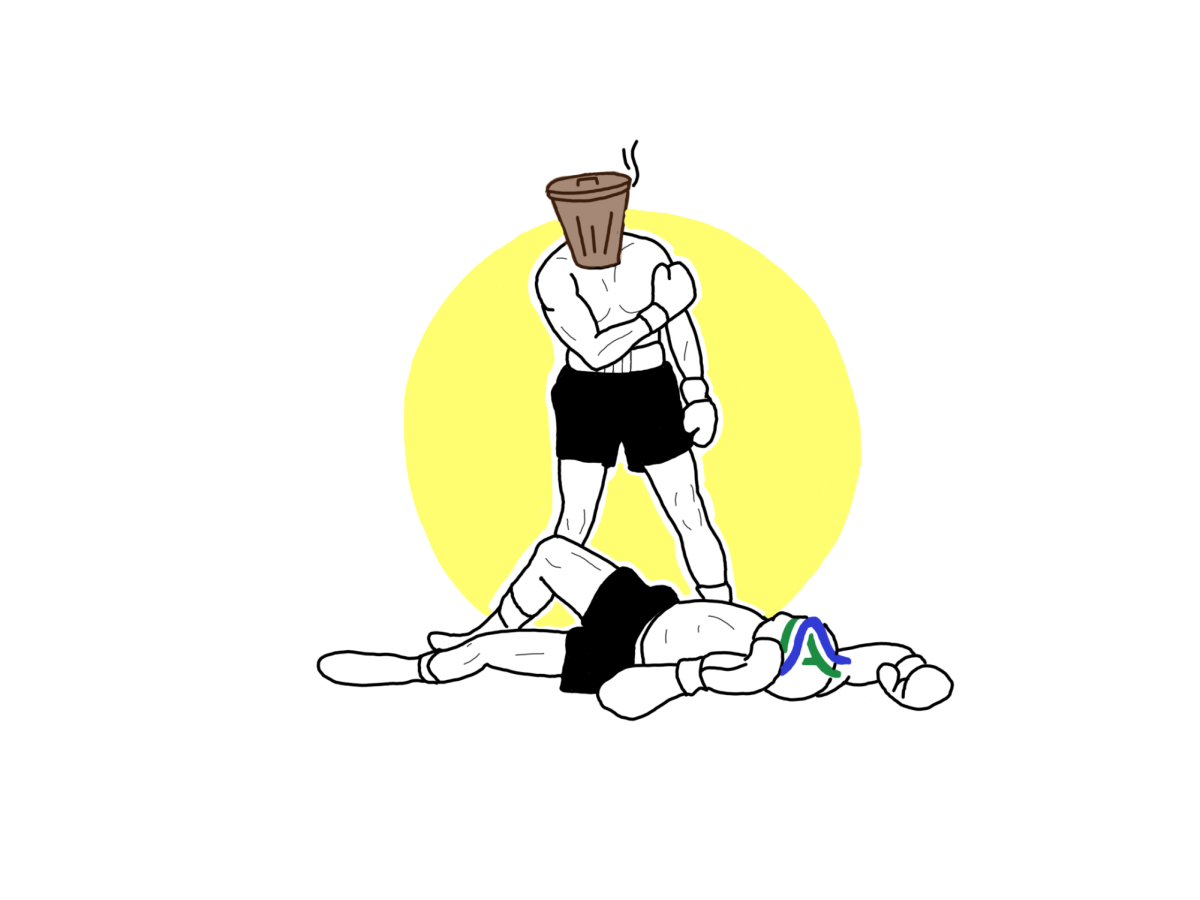
Have you ever had those classes where all you do is just take notes and nothing fun ever happens? Or when the topic covers too much in too little time? Many students definitely have. However, there is a solution: the flipped classroom. The flipped classroom is a teaching approach where students take notes, read textbooks, and complete other “in-class” assignments outside of the classroom, typically at home. This leaves time for fun and exciting events like labs and experiments that you hear about from the upperclassmen. The Bok Center from Harvard states that the flipped classroom frees time for activities and assignments that require a higher level of thinking. By doing the easier work at home, students have time in class to ask their teacher questions about harder topics. While the flipped classroom can cause extra work outside of school, it teaches students to take initiative, learn responsibility, and improve their time management.
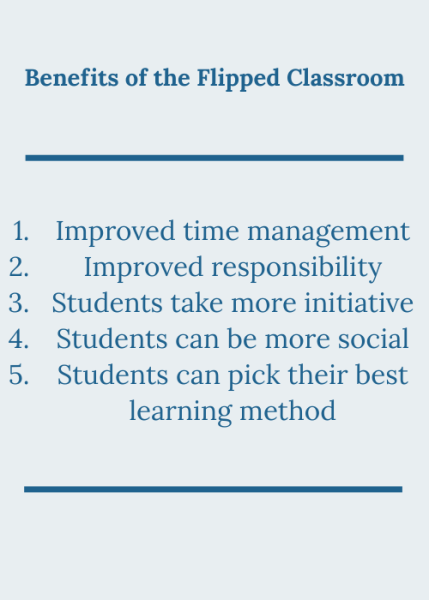
Responsibility, initiative, and time management are all valuable core competencies that, if students learn now, they will be able to utilize for the rest of their lives. The flipped classroom can play a part in teaching students these skills. Students have to cut time out of their day to schedule an adequate amount of time to take notes for their class, which is a part of time management. Students are required to take responsibility for their notes and assignments for them to be successful in the classroom. Learning these skills early on allows students to integrate them into their daily routine, which sets them up for success in their futures. According to Coursera, the benefits of learning time management include stress reduction, decreased procrastination, and more efficiency. Those are all-important skills that students can utilize in their tool belt of work, school, and the future. And students get these benefits from one simple classroom change.
Along with learning new skills, students have more control over their learning with the flipped classroom. A student can pick a learning strategy that works best for them, whereas in a classroom, they might not be able to do. The flipped classroom also allows students to experiment and choose which learning strategies they like the best, since they’ve been confined to a certain one in the classroom. This ties back to the idea of students learning responsibility with the flipped classroom.
Doing notes and textbook readings at home opens communication doors for students. Students are more likely to reach out to their friends for help when they need it on assignments, the Bok Center mentions. They also state that there is an increase in collaboration between students, which raises their social skills and the ability to pick up on social cues.
While there are important benefits from the flipped classroom, it has a few downsides. These include students having more work outside of class, possibly having to stay up later to complete the work, and the student might not benefit from doing work by themselves. Prodigy states that a major issue with the flipped classroom is that students might not have access to the materials needed. However, most of these drawbacks have solutions. Part of time management and responsibility is making time to take these notes, or procrastination causes students to not take initiative, which plays a part in staying up late. But if students continue to try to be responsible and make time for their notes or assignments, they can eventually fall into a routine, preventing late-night homework hours.
A deeper understanding of the content is another benefit of the flipped classroom. Students can grasp the information through active learning, according to View Sonic. They also say that this is a reflection of in-class learning, where more lectures take place, which students can sometimes tune out. This demonstrates the importance of the flipped classroom because students can focus more on their work since they are using the active learning approach.
If one puts it all together, it’s clear that the benefits of the flipped classroom outweigh the negatives. Students are able to grasp new content and pick up important skills for their future subconsciously. It sets students up to be adaptable to new learning situations and teaches independence in learning, which is a major part of college success. So the next time you think about complaining about the flipped classroom, think of how it is giving you a boost for your future career.