

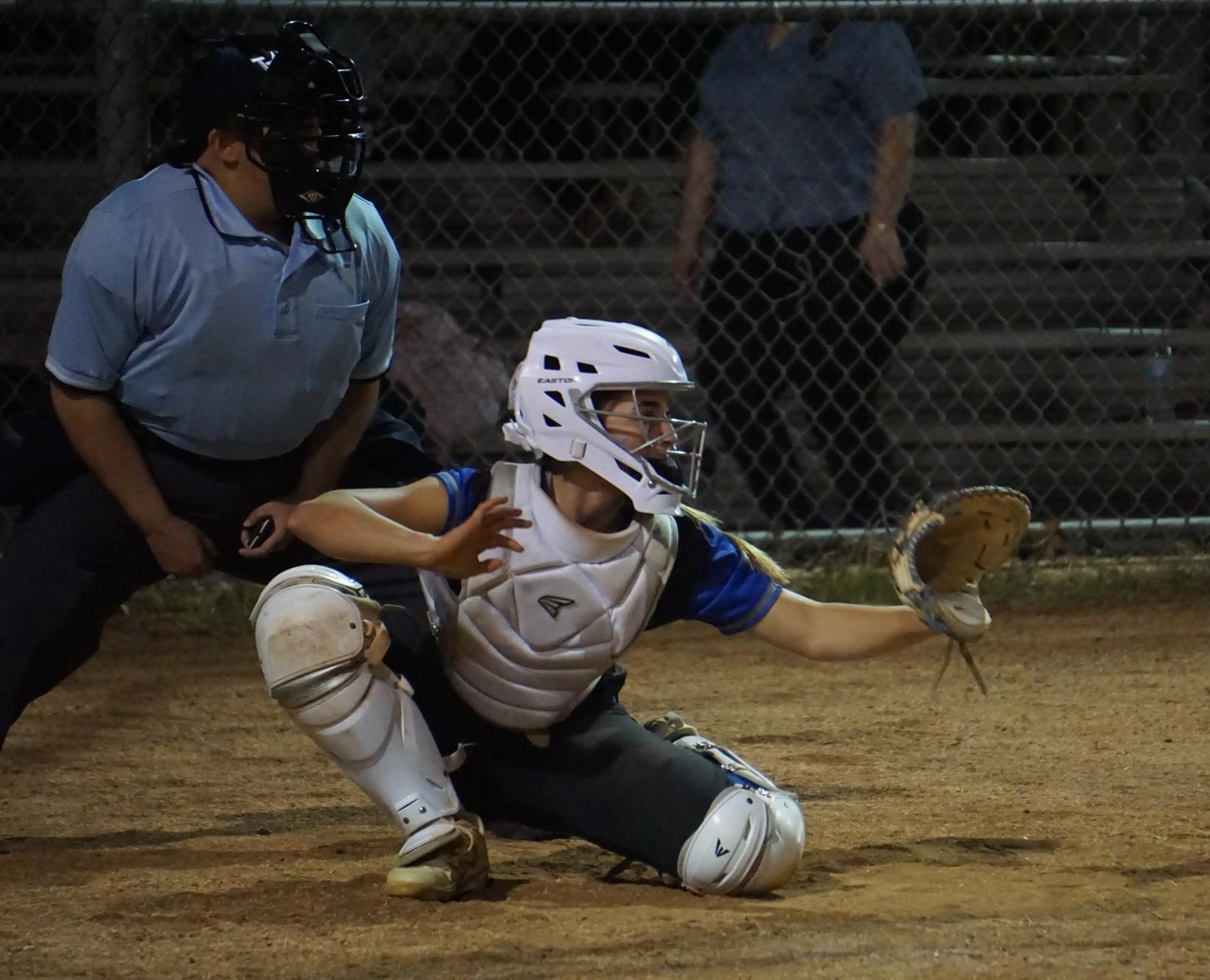
When you think of baseball, maybe you think of playing catch with your mom or dad in the backyard when you were little. Maybe you think of Little League practices stretching late into the rosy haze of a Friday night sunset. Or maybe you think of all the hot, dusty Minor League games you went to as a kid to get a pretzel and use their bungee jump. That’s how I think of baseball, at least. But what you probably don’t think of is computers, clocks and the increasing automation of a game that has, for the longest time, seemed as unchanging as the artificial taste of ballpark nachos.
If you’ve followed baseball at all in the past few years, you’re likely familiar with the sweeping changes MLB commissioner Rob Manfred has made in an attempt to modernize a supposedly timeless game: the pitch clock, the use of the DH in the National League, the runner starting on second in extra innings–the list goes on. But the biggest of Manfred’s changes is the Automated Ball-Strike Challenge System, or the ABS.
After three seasons of testing in Triple A, the ABS has been officially implemented in the MLB. The ABS gives pitchers, catchers and batters (but not coaches or managers) two pitch challenges per game, but doesn’t count overturned calls in these two challenges. Using data from 12 Hawk-Eye cameras installed around the stadium, AI technology will determine whether or not the pitch was a ball or a strike based on the predetermined “perfect” strike zone for each batter.
According to the MLB, the strike zone is the “area over home plate from the midpoint between a batter’s shoulders and the top of the uniform pants and a point just below the kneecap”. Many TV stations already overlay a rectangular box on the screen above home plate as an approximation of the defined strike zone. Now, with the ABS, this rectangular box will dictate the course of the game. The problem with representing the strike zone as a box on a computer system is that the strike zone, as much as the MLB might try, isn’t definable. Sure, umpires follow the MLB’s instructions for the zone, but ultimately, each umpire has a slightly different zone that can vary game-by-game. While some people might see this as a problem, there is nothing wrong with this. Umpires have long played an important part in the game. They make close calls. They make controversial calls. They make calls that, from my perfect view of home plate on the couch thousands of miles away, are obviously wrong. But that’s all part of baseball. Coaches, players and managers have to adjust to the way an umpire is calling a game–if the umpire has a low zone, they’ll tell their batters to take a cut at the curveball but lay off the riser. Disregarding the crucial role of the umpire in the game would be a violation of the fundamental principles of the sport itself.
Moreover, eliminating the role of the umpire in making close calls disrespects their vast training and experience. Becoming an umpire is a long process that can take upward of ten years. Prospective umps first must attend one of the annual MLB Umpire Camps held nationwide. Then, selected candidates move on to the month-long MLB Umpire Prospect Development Camp in Florida. From there, umpires-in-training will spend an average of 10 years calling minor league games before they move up to the big leagues, if they’re offered a spot. That means that umpires will call over a thousand games and see hundreds of thousands of pitches before they even set foot in the MLB. Umpires with especially long careers might see over a million pitches in their life, such as Joe West, who called 5,460 games over 43 seasons to see an estimated 1.6 million pitches over his career.
In comparison, the ABS draws from an electronic database of 4.3 million pitches. While this number is higher than any MLB umpire could ever possibly see in their career, their gametime experience is infinitely more valuable than any database. Aside from having their own strike zones, umpires have the ability to get a feel for the game, something a computer will never be able to do. If an umpire truly can’t see if something is a ball or a strike, they might go off of intuition. If they made a questionable call earlier in the game, they might later make a call in the other team’s favor to make up for it. Leaving these decisions up to a computer removes the emotional aspect of the sport, further disrespecting the umpires’ position.
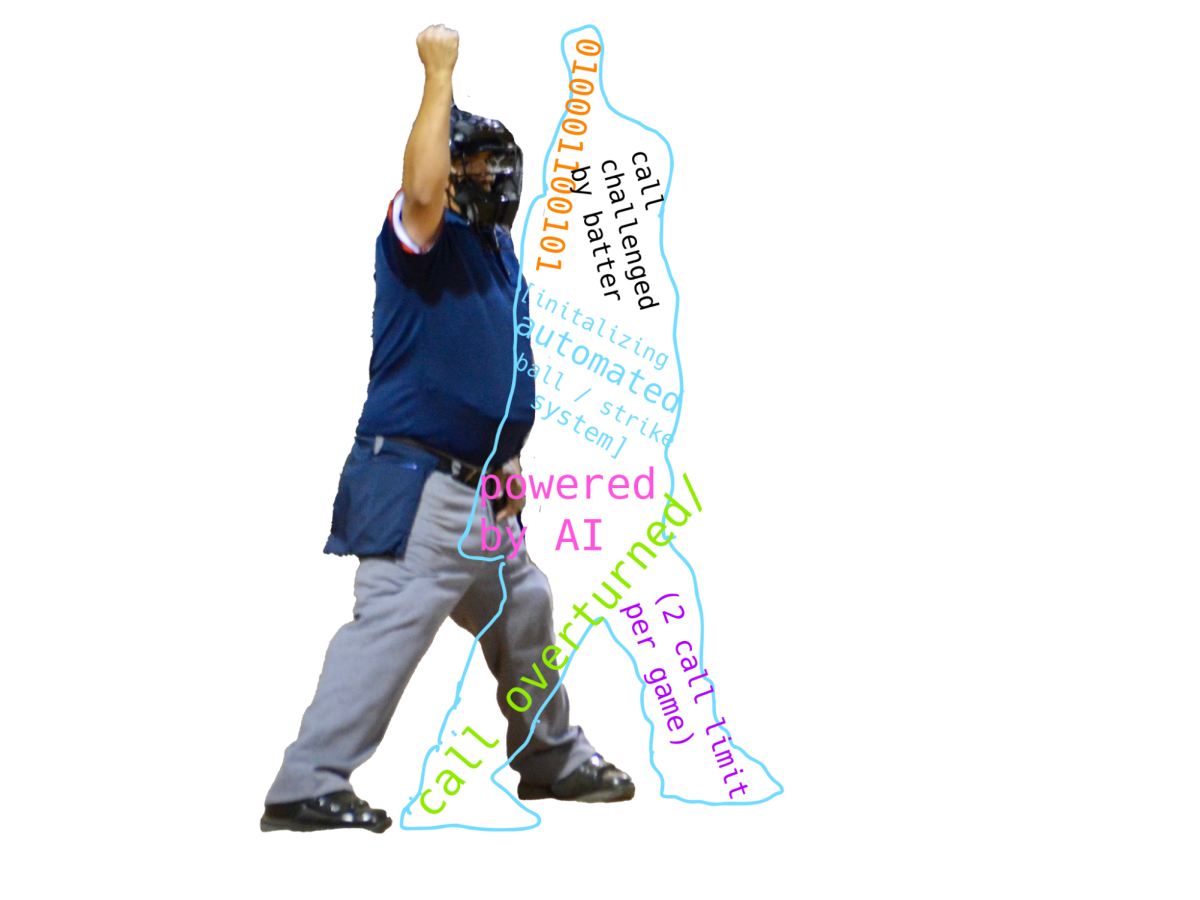
Don’t get me wrong, having played softball for a long time and baseball for even longer, I totally see the appeal of a strictly definable strike zone instead of an umpire whose zone can change the outcome of a close game. I know how annoying it is to have a 3-2 count on two outs, watch a pitch that was obviously at my ankles and start jogging to first base only for some aging umpire with questionable vision to throw his arm across the plate in a lawnmower motion and send me back to the dugout. How nice it would be to simply file a challenge with the ump, get the call overturned and strut to first base with my head held high instead of marching in frustration back to that dugout after another failed at bat, another stain on my batting average.
However, that frustration is part of the game. That role of the umpire in making iffy calls is part of the game. Bad calls lead to controversy, dispute and fights. I don’t mean to encourage these things, but they do make what people commonly call a boring sport more interesting. Instead, ABS is making baseball a sterile, computerized game for no good reason.
The computerization of baseball reflects an overall trend in sports. Over the past 10 years, more sports have become automated or introduced outlandish challenge systems. While most viewers and players can agree that challenge systems using video replay are beneficial, the problem is when the umpire completely loses control of the call. This has occurred in tennis, where at three out of the four Grand Slams, computers make line calls instead of the chair umpire, who simply reads aloud the computer’s decision. Although the ABS isn’t as extreme, both systems take away power from the umpire, creating challenge systems that completely remove any power of a person to make a call. If we turn to the ABS, what’s next? Will we completely lose the steady presence of the home plate umpire? Or like tennis, will the home plate umpire simply become a figurehead position to call out balls and strikes?
Maybe ABS won’t put baseball in such disastrous straits. But even if ABS doesn’t lead to the elimination of umpires, it sets an interesting precedent for a sport that, as James Earl Jones put it in the 1989 film “Field of Dreams”, is the “one constant throughout the years.” Why are we trying to change a game that has meant so much to so many people over the past hundred years; that is as American as apple pie; that has become a quintessential pastime of different countries around the world?
While ABS might seem like a small change, it poses profound consequences to the MLB in the long run. ABS disrespects the important part that umpires play in the game and their countless years of experience. By using the ABS, we are losing control over a game that is one of the most important sports in our history. So, when you turn on a baseball game this season and see Jose Altuve overthrowing a strike call so he can walk to first base instead of hitting a grand slam the next pitch, I urge you to ask yourself, why are we putting AI in baseball? It is time to stop changing a game that has already stood the test of time.