

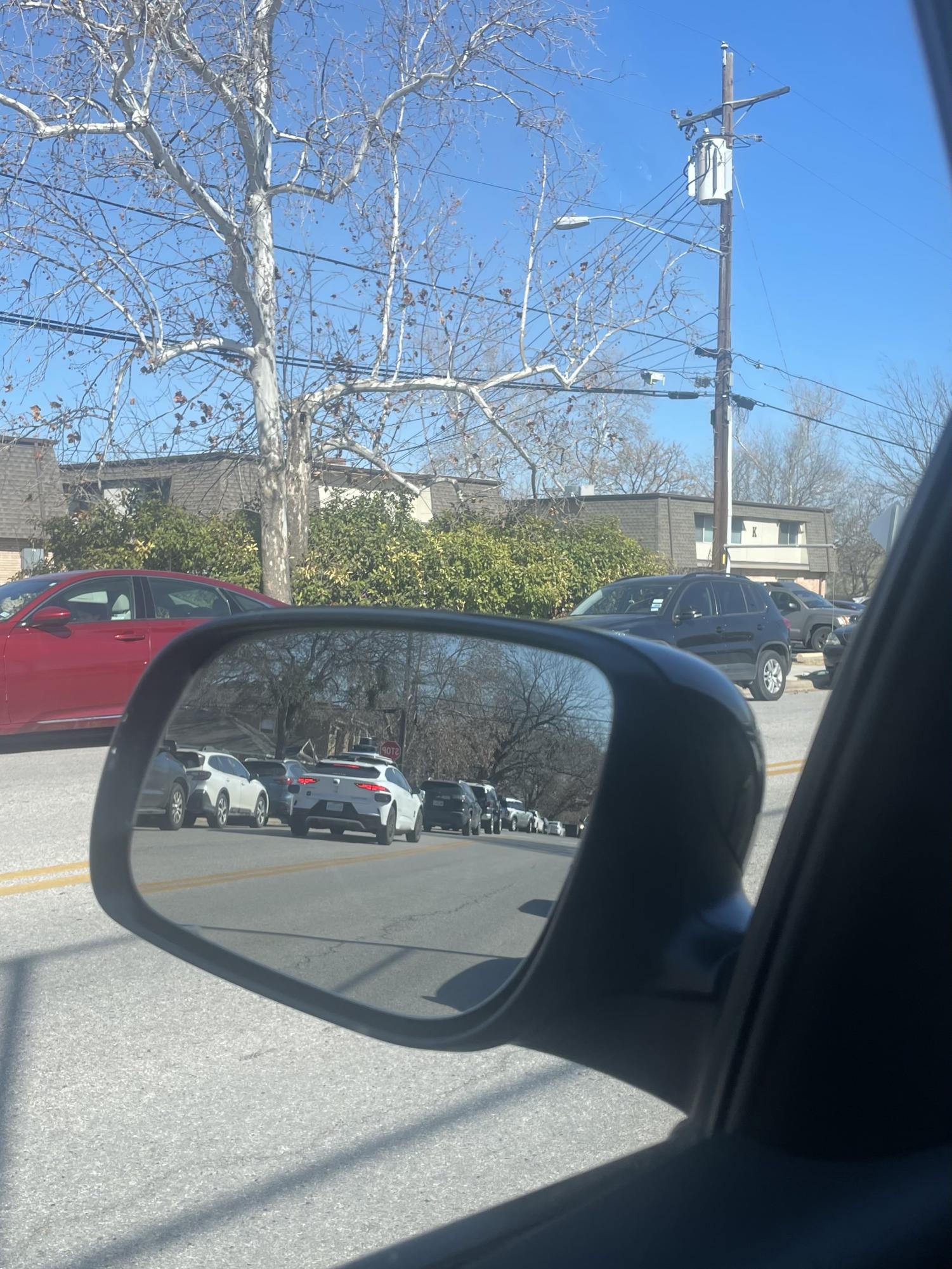
In the cities of Los Angeles, Austin, Miami, San Francisco, Phoenix and Atlanta, self-driving cars patrol the streets. These vehicles, fully-electric Jaguar I-PACE cars equipped with cameras and computing systems, are called Waymos. Through apps like Uber, customers can call a fully-autonomous ride to and from anywhere they please. In the downtowns of these cities, swarms of pedestrians scour the streets for transportation. Driverless cars can help the rideshare shortage come to a safe end, but only in areas where they’re needed. When Waymos end up in smaller neighborhoods, more problems arise. Uninvolved residents are put at risk and their roads are clogged. Around McCallum and the surrounding neighborhoods, Waymos have become ever-present. While they provide convenient, contactless transportation to those who need it, Waymos pose a significant threat to the students involved.

But Waymos have not always been a thing. In 2009, Google launched the Self-Driving Car Project. Toyota Priuses were equipped with cameras and sensors, and set out on 10 different 100-mile courses. The practice gained in these pre-determined routes led to the first fully autonomous ride on a public road in 2015, which happened in Austin. In the following year, Waymo became its own technology company, separate from Google. Up until the year 2020, customers in Phoenix could take trial runs in the metro area. Later that year, it was opened to the public, and the service came next to San Francisco, then Los Angeles. In 2023, Waymo switched its fleet from Chrysler Pacifica Hybrids to all-electric Jaguar I-PACEs. Since then, the company has partnered with Uber to add Austin as a service area, as well as St. Louis, Baltimore, Philadelphia and Pittsburgh.
In each of the cities mentioned, Waymo has fleets deployed for a simple reason: to make the roads safer. According to their website, the company was created to provide a trusted driver that never got “drunk, tired or distracted.” In the context of these cities’ busy downtowns, it makes sense to have excess fleets waiting for customers. An influx of pedestrians trying to move through the streets becomes dangerous for all drivers, regardless of what they’re doing.
Picture a Lyft driver going down Red River Street, dropping one customer off and going to pick up another. They have to focus on the directions provided, changes to the route, requests from the rider and additional distractions from both the road and the vehicle’s occupants. While they are physically sitting in the car, that doesn’t always mean they’re there. Similarly, a Waymo driver will never actually enter or exit the car. Just like a distracted driver isn’t fully aware of what’s around them, an autonomous driver is not aware of the nuances of society.
While Waymo is beneficial in areas with higher pedestrian density, it has adverse effects on areas without large amounts of foot traffic. People walking in neighborhoods aren’t likely to be going across town, and if they are, they most likely have a plan to do so. Pedestrians in neighborhoods are more likely to be family-aged or have small children. That means regardless of who’s driving a car, there are more possible factors to be watching for.
In areas like a school zone, driving becomes especially dangerous. Those behind the wheel have to watch out for student drivers, unloading school buses, distracted pedestrians and anything else that passes through a school’s campus. While it’s hard to tell whether or not a human driver and a Waymo driver could catch the same error in the same amount of time, evidence shows that there’s a difference. For example, in Santa Monica, California, an elementary school student was hit by a Waymo while being dropped off for the day. The company released a statement claiming that the Waymo braked from 17 mph to less than six before it hit the child. Waymo declared, “A fully attentive human driver in this same situation would have made contact with the pedestrian at approximately 14 mph.” While the odds sound good, the real debate is over why Waymos are around school campuses anyway.
Students already have many methods of transportation to McCallum. Those who live within walking distance can get to school by biking or on foot. Students who aren’t on bus routes, don’t drive themselves, and can’t be dropped off might need to pay for a rideshare. There’s nothing wrong with having options, but all of them end up on the streets around McCallum. Waymos just add one more vehicle to the mix and makes it even more dangerous for pedestrians to get to class for the day.
Austin has had incidents where several cars in the company’s fleet have dangerously and/or illegally passed school buses. Waymo vehicles are equipped with radar, sonar, lidar and photo cameras, so they see everything. But that doesn’t mean they understand it. Even after performing test drives with AISD buses, Waymos continue to illegally pass buses on the open roads. While the company is complicit during the incidents they’ve been involved in, AISD requested that they no longer operate around the campus from morning to afternoon on school days. After 20 citations from the district, it’s hard to justify why the vehicles need to be in or around school zones.
Even after AISD’s repeated requests for Waymo to stop servicing areas around McCallum and other campuses, the problem continues. Even though the company might not have bad intentions, the outcomes are poor. Student safety remains AISD’s priority for students, but the more factors that are added, only make more room for error. According to the National Highway Traffic Safety Association, there were 1,429 accidents involving Waymos from July 2021 to Nov. 2025. That is around ¾ of the student population of McCallum, and we don’t have anyone to risk. Waymos are dangerous and should not be around school campuses any longer.