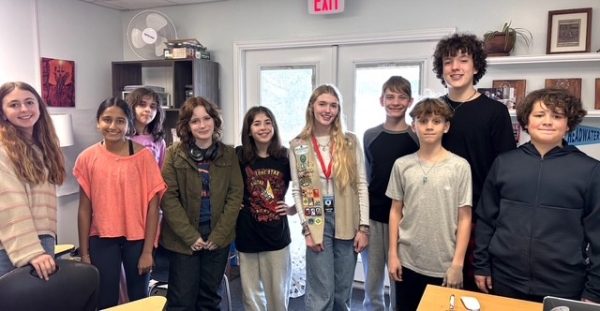
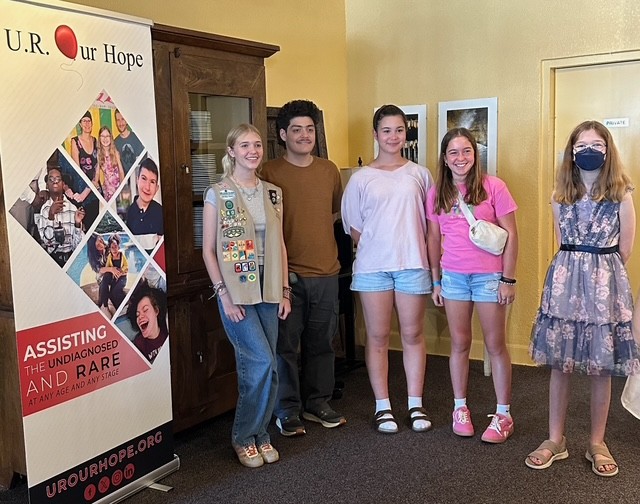
Senior Willa Fischer might know better than anyone else that it takes a whole lot of advocacy to make change. As an ambassador in Girl Scouts (Troop 40), she began her Gold Award project in August. Her project focuses on assisting kids with rare diseases advocate for themselves in medical settings. Fischer herself has had experience with this; at a very young age, she was diagnosed with scoliosis.
She realized quickly that she was being overlooked. Doctors would come in and talk only to her parents, leaving her anxious and confused.
“It was a really difficult situation because I knew I was in the hospital but I didn’t really know what was happening,” Fischer said.
It took her a while to learn to speak up for herself in these situations, so for her Gold Award project, she wanted to help children who might be in a similar situation.
“I realized that it was a need in my community, so I want to help others so they can learn to advocate for themselves, hopefully a lot faster than I did,” Fischer said. “[This will allow them to feel] comfortable with doctors.”
It takes an average of seven years for a child to be diagnosed with a rare disease, and a good number of them won’t make it to their fifth birthday. Fischer hopes that by helping children advocate for themselves, doctors might take them more seriously.
“I want the children to be more confident in themselves because I think it is a lot more likely for them to get the care that they need if they know how to express themselves,” she said.
Fischer’s project advisor, Julie May, watched Fischer grow throughout this process.
“She gained confidence and leadership skills, and it was clear to see how passionate she was about the issue,” May said.
However, the project didn’t come without its challenges. Initially, Fischer’s project was rejected by the Girl Scout Committee. It put her advocacy skills to the test as she had to fight for her project to be approved.
“I ended up getting it approved but it took a lot of push back and a lot of extra meetings. At one point, I had to get on a Zoom call and walk them through a mind-map of my thought process,” Fischer said.
But she didn’t stop there. Fischer’s mom and troop leader, Lisa Fischer, after noticing the shortcomings of the committee, became a member of the Gold Award Committee to change it from the inside. As of the fall of 2025, she is a Proposal Reviewer and a Mentor for Girl Scout Gold Awards of Central Texas.
“It was clear to me while watching Willa navigate the proposal review process that the Gold Award Committee was woefully understaffed,” Lisa said.
She hopes that her addition to the staff will help future Girl Scouts navigate the system more smoothly.
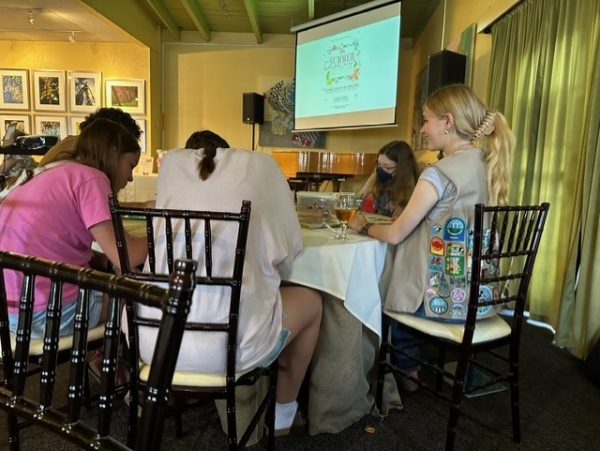
As for Willa, the process was far from smooth. She had to work out many difficulties along the way. For one, she learned that because of many of the kids’ differing complications, many of them couldn’t make it to in-person workshops. After doing many in-person workshops and speaking to both a Daisy troop and to Headwaters Monastery Middle School, Fischer plans to do online workshops for those who couldn’t attend otherwise. She also had to adjust her curriculum to accommodate children using AAC (Augmentative and Alternative Communication).
“I’ve had to adapt my workshops to fit the constraints of some of these kids,” Fischer said. “I have some printouts that I give out to kids, that way they can advocate for themselves even if they can’t use their voice to communicate.”
As her mother, Lisa trusts that Willa’s skill set led her to success with this project.
“Willa has always been a very empathetic person,” Lisa Fischer said. “She can read people and understand their feelings. When working with kids who are dealing with serious health concerns, she has been able to give care and concern while adjusting her workshop to fit the situation and the child or teenager.”
Already, Willa Fischer has seen her workshops making an impact. At her first workshop, she explained different accommodations doctors can make for patients that many children don’t even know they can ask for. This especially resonated with one of the children she spoke to.
“After my workshop, she came up to me and told me she had no clue there were things she could ask for, and then she said she would totally be using these pages with her doctors,” Fischer said. “I felt so validated to know that it was making a difference in these kids’ lives.”
But it’s not only children Willa Fischer has seen a difference in. To create her workshop curriculum, she collaborated with different medical providers to get insight into her topic. Dr. Kirsten Ross, her spinal surgeon a few years ago, gave Fischer hope for the future of medical providers.
“She’s a much younger surgeon,was very pro-self advocacy for kids and explained that even when parents aren’t letting the kids speak, she is always trying to talk to the kid,” Fischer said. “It’s so exciting to know that there already are some doctors who are beginning to shift their focus to the kids.”
Fischer hopes that her project will continue to reach kids who could benefit from the resources she is providing. The organization she partnered with, U.R.Our Hope, has agreed to continue teaching her curriculum to new kids they work with to give her project a sustainable impact in the future. Willa Fischer also hopes that her message will be able to reach people even outside of that community so that they might be able to contribute to the cause in their own smaller ways.
“There’s a reason that it takes an average of seven years for kids to be diagnosed, because people aren’t really knowledgeable about that kind of thing,” Fischer said. “So I would say that if you meet someone, don’t underestimate them and just be inclined to listen. Even if my project doesn’t affect you directly, it might give you resources to help someone else.
If you are interested in learning more about Fischer’s project or think that you or someone you know would benefit from the resources she provides, you can learn more through Fischer’s Link Tree.