


By day they teach in classrooms; by afternoons, they lead on the courts, fields and tracks. Equal parts teacher and coach, they carry a dual responsibility, stretching their lessons beyond the school day, shaping students and athletes with skill, discipline and leadership while balancing their responsibilities at school, practice and at home.
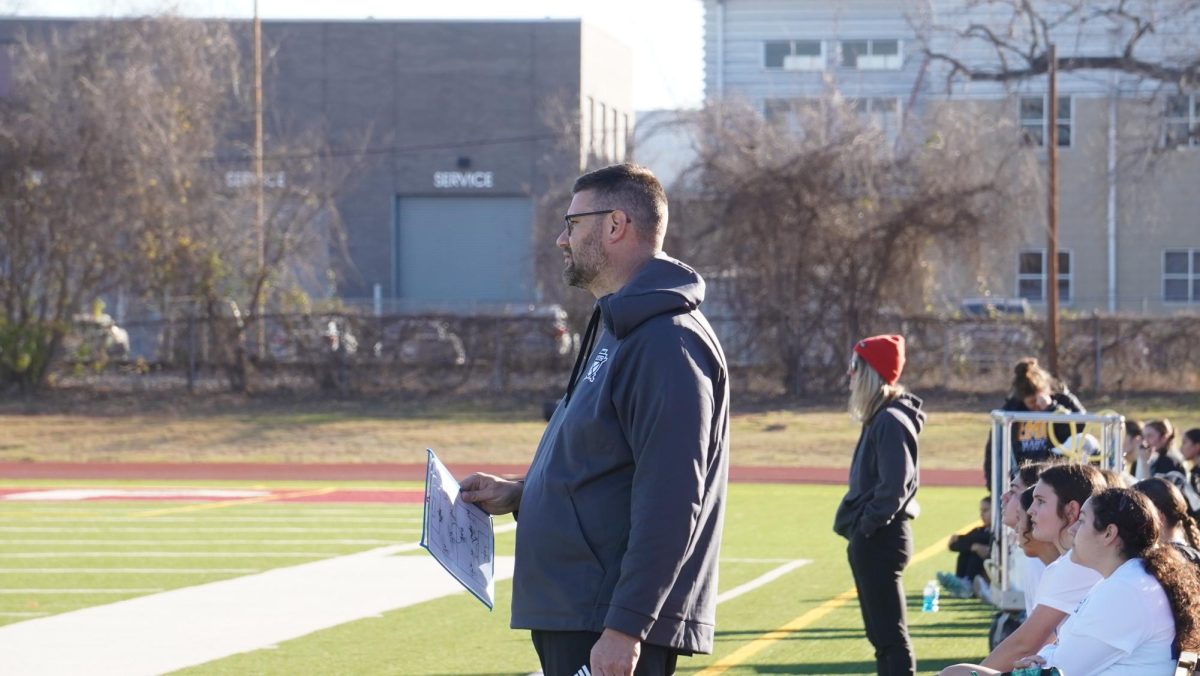
Growing up with three brothers and strict parents, JV-B girls soccer coach and special education teacher Justin Marlin, was led into a life surrounded by sports and the inspiration to support others. After graduating from the University of Texas at Austin with a Bachelor of Arts in History and Texas State University with a Master of Public Administration, Marlin searched for employment.
“There were no jobs,” he said. “It was kind of a recession. I was almost 30, I had a wife, and I needed a job with benefits, so I thought of teaching.”
Eventually, Marlin landed at a charter school where he was able to get experience and his teaching qualifications simultaneously.
“The charter school allowed me to get my teaching certificate while I was teaching,” he said. “Working with this school, I combined Social Studies, the content that I love, with a job that was paid and had benefits.”
After gaining educational training and qualification, Marlin grew to love teaching, and he began searching for another job. During an interview at Stony Point High School in Round Rock, Texas, Marlin was approached with an offer to coach the boys’ soccer team. Enticed by the proposal, he considered the position and was encouraged to talk to current McCallum girls soccer head coach Jason Rich, who, at the time, was working at Stony Point as a boys soccer coach and AP World History teacher.
“I went in to interview for a teaching job [at Stony Point High School], and they asked ‘Would you coach soccer?’ and I said ‘Absolutely,’” Marlin explained. “I hadn’t even coached soccer, but I told myself ‘I’ll figure it out’.”
Marlin accepted the offer and began his coaching career. He would later coach and teach at Navarro Early College High School and Doss Elementary School before arriving at McCallum High School this past school year.
For Marlin, his experiences growing up and learning from past years of coaching have led him to become more encouraging rather than demanding on the field.
“The kids that I’ve coached here [at McCallum] need much more support than they need toughness,” Marlin said. “They are harder on themselves and I don’t need to pile on top of that. Our players just need support and confidence and positivity, so that’s what I try to do.”
Similarly, he has begun to apply these ideas into his classroom, becoming more forgiving and motivating.
“The older I have gotten the more I have realized that being tough or hard on your kids doesn’t really get the results that you want,” Marlin said. “They have to know that you care. Having realistic expectations and being patient makes you a better teacher and coach than being an expert in your subject or an expert in technical ability.”
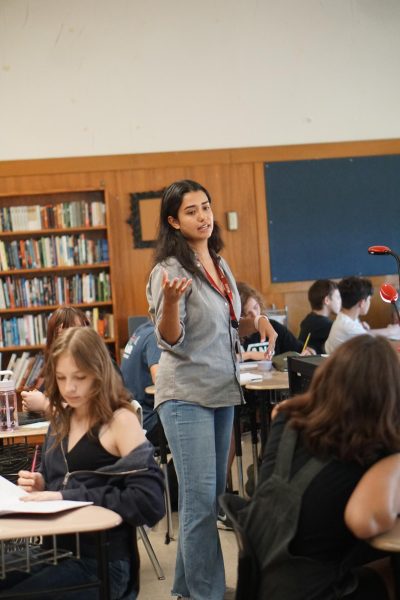
Also in her first year teaching at McCallum is Sara Porsa, the freshman-A volleyball coach, freshman-B girls basketball coach, advanced English I teacher and Creative Writing teacher. While Porsa never had prior experience with basketball, she played volleyball her whole life up until attending Texas State University. During her sophomore year at Texas State, Porsa met a teacher’s assistant who quickly became a lifelong role model.
“Her being like a mentor role just inspired me,” Porsa said. “Meeting her was a very pivotal moment in me deciding what it is I wanted to pursue.”
Facing the challenges of a new school, sport and experience, Porsa felt overwhelmed in the beginning but soon grew into the community.
“When I first started [coaching] with volleyball it was just so early in the year and we were already up and running by the time school started, just learning how to balance things was a challenge, but overall, I think I have a really good support system here, at this school, so that definitely helped a lot.”
While Porsa finds teaching and coaching highly rewarding, it comes with its challenges, specifically finding a balance between being strict and being empathetic.
“In sports, there is a direct consequence if you do ‘X’ thing,” Porsa said. “In the classroom it’s a little bit different. You can’t just be tough on a kid because they didn’t study or they got a bad grade, you have to consider that there are a lot of other factors playing into their lives. Instead of being tough on a student, you need to come from a place of understanding.”
In her first year, Porsa focused on consistency in her roles, which has taught her lessons she has applied back into her work.
“I have tried to get everyone on the same page and on the same playing field,” Porsa said. “I hope all of my athletes learn to be consistent, coachable players. To be coachable is to be able to achieve whatever it is you want to achieve. I want my students to be lifelong learners, to not be afraid of knowledge because knowledge is power and to be able to put yourself in a position to want to learn.”
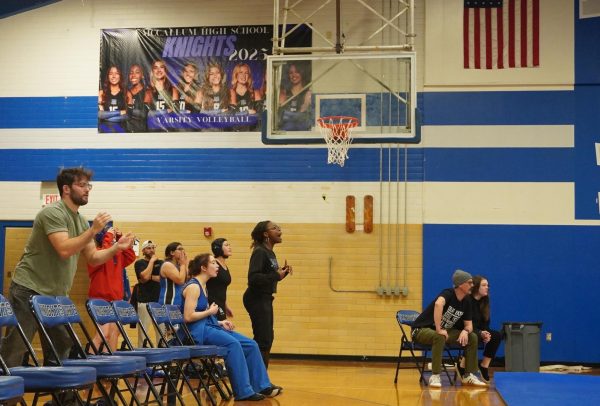
Similarly, James Hutcheson also coaches alongside his english teaching McCallum. Since the beginning of his career, Hutcheson taught at McCallum, even being a student teacher here while enrolled at the University of Texas. Four years ago, Hutcheson discovered Jiu Jitsu and became engrossed in the martial art. He brought his love of the art to McCallum and now incorporates his training into coaching wrestling, a similar sport, and teaches Advanced English II and English as a Second Language I-IV.
Hutcheson always wanted to teach, not because he loved the material or the fulfillment, but because of the relationships he could make and individuals he could meet.
“I like people,” Hutcheson said. “I did not become a teacher because I love literature. I did not become a coach because I love wrestling. I love people and teaching and coaching are ways to help people be better.”
He parallels both Marlin and Porsa’s struggle with time management and the balance between being firm and being understanding.
“When I’m tough and ‘mean’ [when coaching], I don’t actually feel angry, it’s just a different level of intensity in a different situation,” Hutcheson said.
Though his role at McCallum encompasses his affinity for people and commitment to wrestling, that doesn’t cover up the downsides of his job.
“Head coaching makes you do a lot of logistics,” Hutcheson said. “It’s almost like running a business. I have accounts to worry about, I have fundraisers to do and I have to manage people. My role has also unfortunately made me sacrifice things like time, money, vacations and sometimes the quality of relationships.”
While Hutcheson faces challenges in his job, he has been able to accomplish his dreams of helping people.
“The biggest overlap and the most important overlap between coaching wrestling and teaching is that both literacy, reading, writing and understanding language, and wrestling both fundamentally make you a better person,” Hutcheson said.