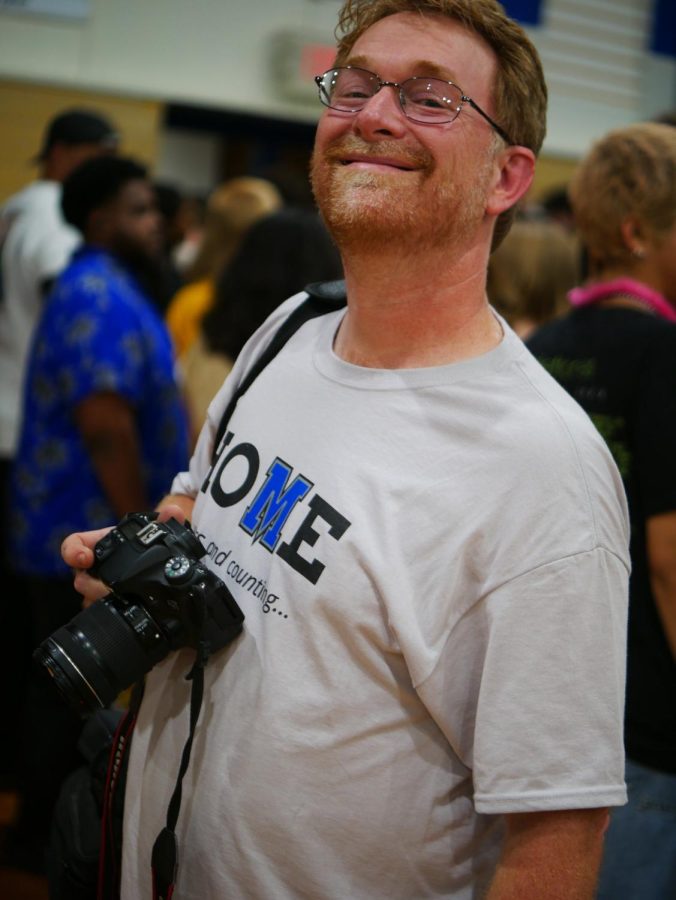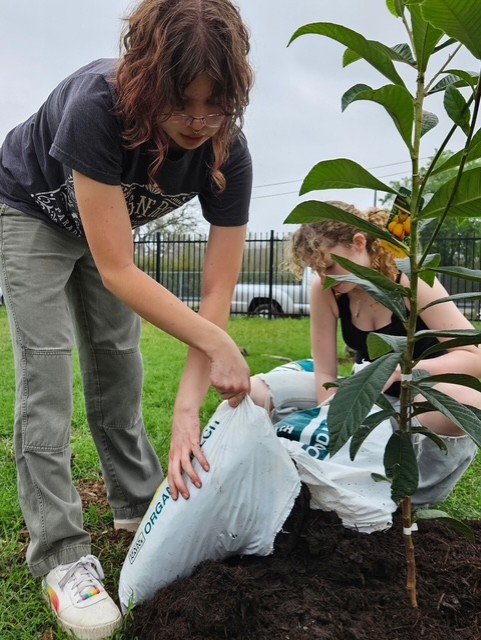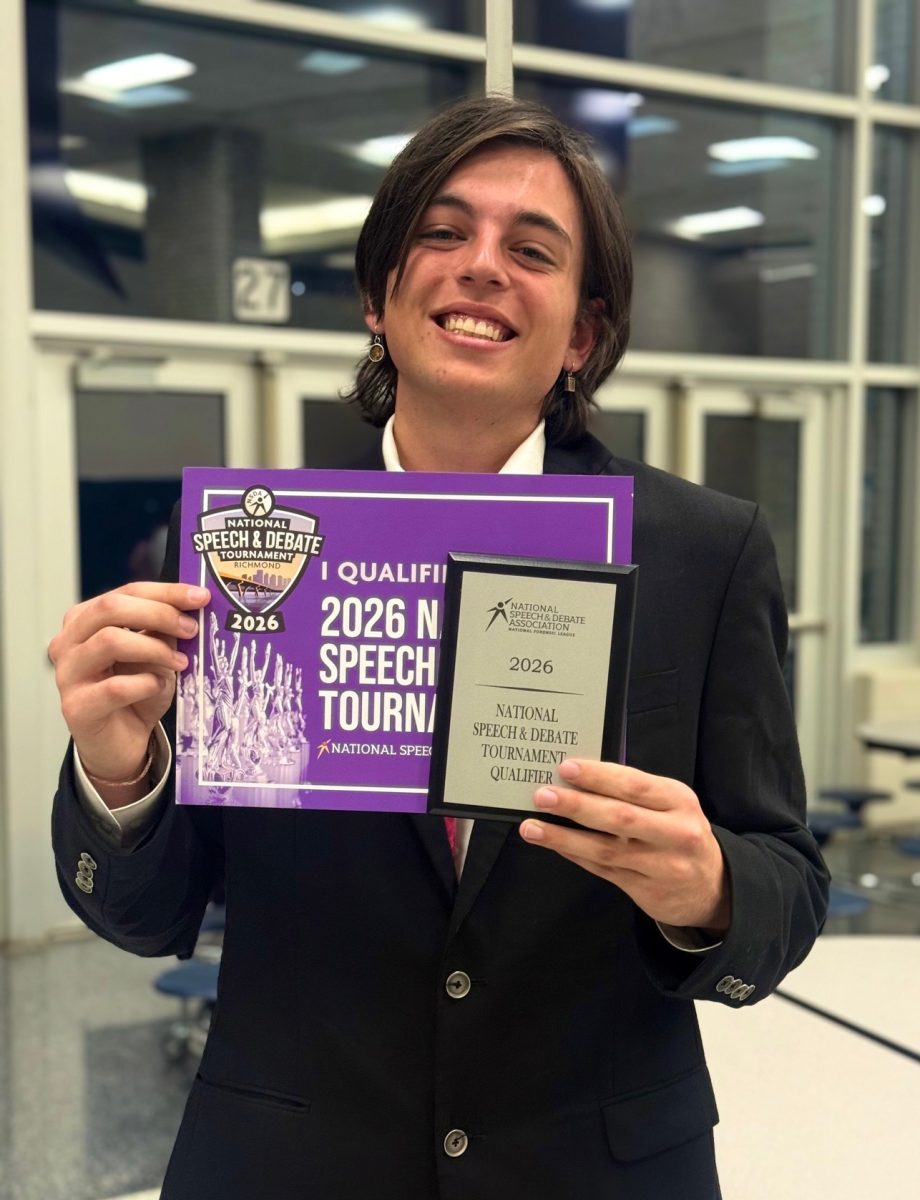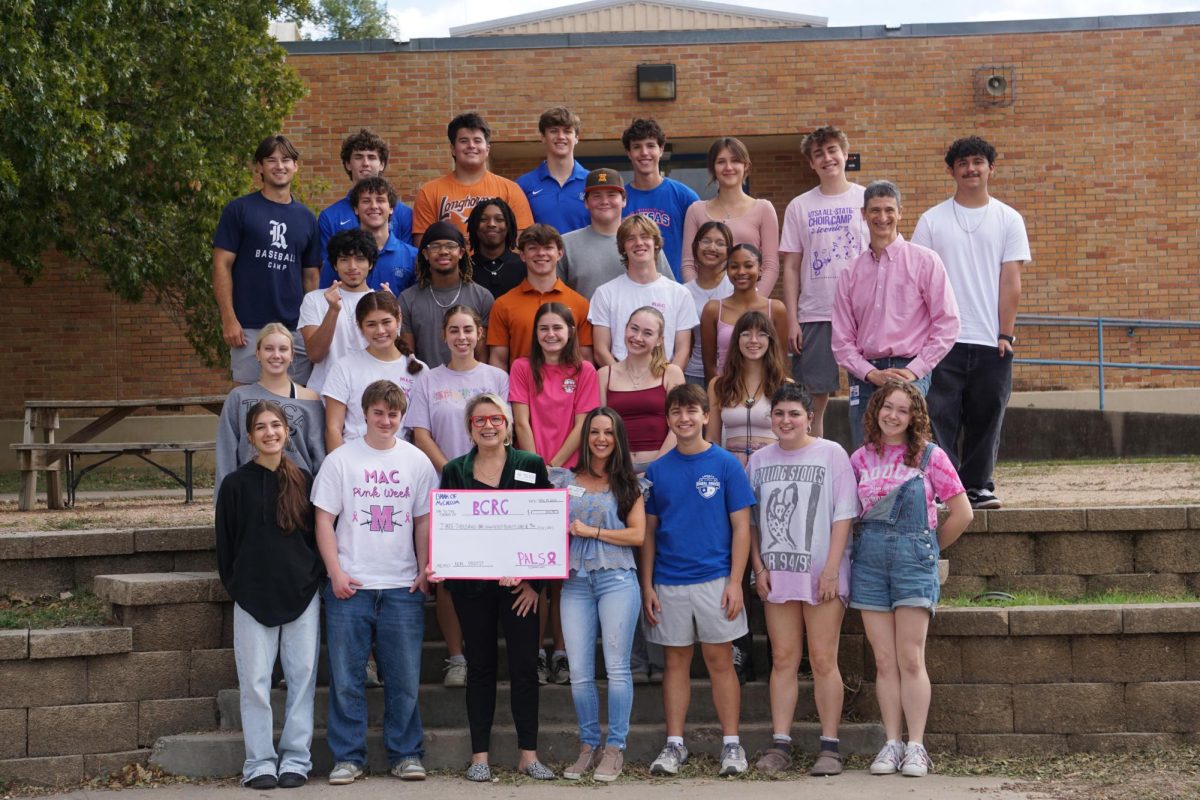
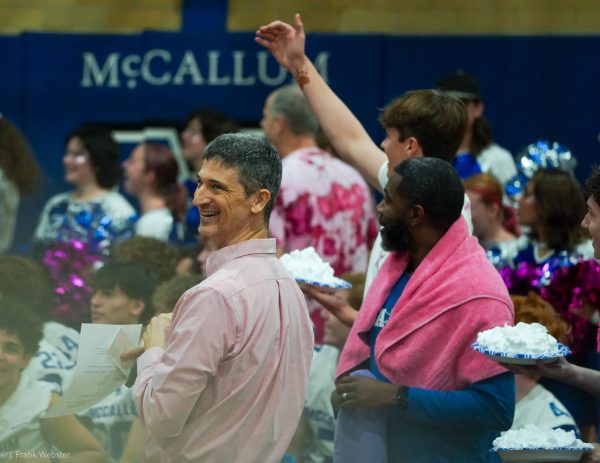
Most people think of the Peer Assistance and Leadership program, PALS, as the smiling faces of the renowned Pink Week and other McCallum charities and fundraisers. However, the 36 students of the second period class, plus Richard Cowles, the program’s adviser, who is currently working his 13th year, do much more for the community than meets the eye.
A-day Fridays are spent planning fundraisers, but every Monday and Wednesday the PALS arrive in Cowles’ classroom to prepare for their elementary school visits. These visits consist of meeting with two selected PALees from that day’s designated school for 30 minutes each. The PALees connect with their PALs as a way to have both a role model and friend to go to.
Currently, the PALs visit six elementary schools– Brentwood Elementary, Gullett Elementary, Highland Park Elementary, Lewis Lee Campbell Elementary, Maplewood Elementary and Reilly Elementary– which is more than any other AISD High School’s PALS program. Cowles explained that the selected elementary schools are McCallum feeder schools, which creates a closer bond between the PALS and their PALees.
“We serve and act as ‘big-brothers/big-sisters’ for kids that will eventually become McCallum Knights,” Cowles said.
Usually, PALees are underprivileged or students with traumatic experiences who would benefit from talking to older students. Second-year PAL and senior Imogen Hendrickse believes that the PALees benefit from these visits because they are able to open up to the PALS in ways they might not have to others.
“A lot of the time, kids just need someone who will actually listen to them and make them feel valued,” Hendrickse said. “That kind of connection is so valuable and makes all the difference.”
Not only do these visits impact the PALees, they also give the PALS valuable life lessons. First-year PAL and junior Nels Pruner mentioned how his visits have given him fundamental experiences and how the PALees also help him.
“The visits give me a great sense of gratitude and the kids give me a fresh perspective on things when I may be feeling stressed or overwhelmed, or anything like that,” Pruner said. “Not only does it help us gain emotional knowledge, active listening skills and an awesome feeling of accomplishment, we give our PALees a strong role model and positive person in their life who they can rely on instead of an adult.”
Cowles emphasized another positive the PALS get out of visits, being that they are able to spend time with such inspired and pure people.
“Small children, or younger children, are less filtered, so you really kinda get to remember what it’s like to be in awe of the world,” Cowles said.
Hendrickse agrees that the PALS also get beneficial experiences out of their visits, specifically learning how to be a good person to look up to.
“The biggest life lesson that PALS get out of these visits is how to be a good role model to those around us,” Hendrickse said. “We have learned to continue working toward giving back to our community and making everyone feel valued.”
Hendrickse noted that over time, the PALS and their PALees become pretty bonded, but the original assignment process can become a little complicated.
“On the first visit to our schools, we sit down and do a little rotation where all the PALS take turns talking for one to two minutes with each of the new PALees,” Hendrickse said. “If you find that you ‘match’ well with one of the PALees, you can tell Mr. Cowles, and he will assign you to that kid. Most of the time, though, everyone loves all the kids, and it can be more randomized.”
Hendrickse highlighted that her most memorable moments from PALS are during these visits with her PALees.
“A lot of my favorite memories with the PALees are just when I get to sit and talk with them, and they tell me something really special,” Hendrickse said. “Like last year, one of my PALees told me that Thursdays were their favorite day because they got to spend time with me.”
Through these visits, the PALS have become an extremely bonded community on campus. To many of the PALS, the program is like a second family almost immediately. For Pruner, the program’s planned activities have helped form such a close group.
“We spent a good bit of the year just focusing on building as a team and group, so that definitely helped build a community,” Pruner said. “Over that time, I made great friendships and our group has already accomplished some great things in our short amount of time together.”
So far in his first year, Pruner’s favorite moment from the program was being with the other PALS during McCallum’s fundraiser for breast cancer awareness, Pink Week.
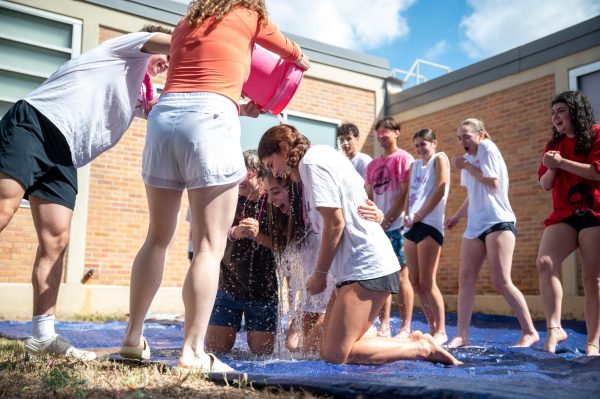
“My favorite memory from PALS was the last day of Pink Week, whenever we finished up with the day’s activities,” Pruner said. “Everyone kind of gathered at the shooting PALlery area and we had a water balloon fight that was super fun.”
Outside of the visits, Cowles noted the program’s other life-long takeaways, which mostly surround its four major events, namely Pink Week, Coats for Kids, International Women’s Day/Week and Shower Strike.
“I think the service component is important, our four big projects are trying to establish that groups of good people can do great things,” Cowles said.
Cowles explained that they are also a program made to represent the student body, which is another major reflection that the PALS share. This eclectic group of students goes on to become so close, many of them reflecting on the opportunity to meet people they otherwise would not have.
“I make sure that we have introverts and extroverts, and athletes and students and students that struggle and have had life experiences and all that,” Cowles said. “It’s important for me to do that because one, that’s the kids that we’re working with and two, I want the students to realize that McCallum is bigger than their little world.”
Another activity PALS engage in is the preparation for their visits to practice and learn situations before beginning actual service. Hendrickse mentioned that this allows for everyone, but especially the first years, to go to visits feeling comfortable and make sure everyone is on the same page.
“We usually do a lot of simulations in class at the beginning of the year before visits actually begin,” Hendrickse said. “The simulations are usually just mimicking something that may happen during a PALS visit to ensure we, as PALS, will respond accordingly.”
Mr. Cowles added some specific topics that the class covers, such as skills that are important when working with children: how to be a good listener, topics to talk about and the do’s and don’ts.
“We also talk about times when you get in over your head, and what to do. That’s one of the things that we talk about, not everyone has the ability to express appreciation and gratitude, it’s a learned skill,” Cowles said. “So, a lot of the time, the kids won’t say that because they don’t know how to convey it.”
For Pruner, these skills aren’t brand new, but go into more depth so they can be fully prepared for more situations, creating some challenges for the PALS when applying new information into important circumstances.
“It’s challenging to go into it not knowing much, but I’ve learned that if I keep an open mindset, everything works out,” Pruner said.
Similarly, Hendrickse found that not giving advice was the hardest thing for her.
“It’s super easy to want to solve problems that your PALee may be having, but the important part about being a PAL is helping the PALee figure out a solution themselves rather than giving them the answer,” Hendrickse said. “It is our job to guide, but not solve. After all, we are safe places and mentors, but that doesn’t mean it’s not hard to want to fix things for your kids when they’re going through a tough time.”
Through these challenges as a first-year PAL, Pruner mentioned that the best piece of advice he was given was from an author, Miguel Ruiz.
“Mr. Cowles shared with us a slideshow, over text, called ‘The Four Agreements’,” Prunner said. “It was very insightful and made me think about a lot of ways I can improve in my life.”
For Hendrickse, the most practical advice she got last year was to not underestimate herself.
“The best advice someone gave to me as a first-year was to not question that you belong,” Hendrickse said. “Everyone in PALS is so special and impressive, and it’s hard sometimes not to start to question if you deserve to be in the same program as so many incredible people. But, in reality, we are all chosen because we offer something important and unique to the program and the sooner you can embrace that and find that confidence, the more you will be able to give to and receive from the program. This helped me so much in finding my own security and confidence, ultimately helping me become the best PAL I could be.”