



It’s a feat for anyone to make it into the Texas Music Educators Association All-State Orchestra, but for three students from the same school to play the same instrument is something miraculous. However, in this case, no miracle was involved. Senior Owen Black, junior Enid Hanson-Kickertz and freshman Ezra Hawley earned their accomplishment through hard work and dedication. The TMEA All-State Orchestra is the highest accomplishment a high school student in orchestra can achieve. It takes multiple rounds of auditions and ends with a convention in San Antonio where the orchestras rehearse and then perform a final showcase of their work.
“The thing that blows my mind is that all three students play the same instrument,” orchestra director Ricky Pringle said. “So to have three kids that play the same instrument and go to the same school make all-state is very rare.”
Each year, over 70,000 students audition across the state, making it unusual for a freshman to get in. Although Black and Hanson-Kickertz have made it into the program before, Hawley had no idea what to expect.
“The basses, especially at this school, are really good, so it could sometimes be intimidating,” Hawley said. “But I just played my best and it ended up going well.”
Pringle, who watched these students advance over the year, was especially impressed by Hawley, who had to train himself for the audition without any background knowledge and managed to rise to the top.
“The two older students have made it before, so they knew the work that was required to make this happen,” he said. “With the freshman student, seeing him understand the kind of work and dedication that it took and watching him grow from coming in as a middle school musician and now taking it to the next level, it was exciting to see.”
The students got their etudes in July, so they spent their summers preparing for the auditions. For Hanson-Kickertz, she took her preparation above and beyond.
“I practiced a lot over the summer and I also went to the Bradetich master classes at UNT, which helped me work with other musicians across the state to mutually prepare for the auditions,” she said.
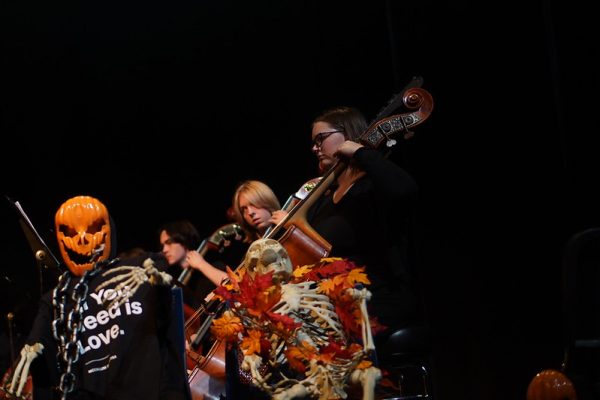
Bradetich master classes happen annually at the University of North Texas and involve a week of study for bassists, usually with prominent professionals teaching as guests. But what Hanson-Kickertz found most helpful to prepare was reaching out to those around her.
“Don’t be afraid to ask people who are also auditioning for help,” she said. “You would think it’s a very singular thing, but here especially, people are more willing to help if they know that you are struggling. So getting over that and asking people for help will prepare you much more than you would think for your audition.”
Pringle agreed that this quality was beneficial to these students, as he was commonly asked by them for support in their preparation.
“Typically, we prepare some in class and then if students ask, I can help them individually,” he said. “A lot of times these particular students would seek me out and ask, which I think contributed to their success.”
For both Hawley and Hanson-Kickertz, they have more to thank than their ability to seek out help. They both attributed their motivation to audition to Pringle, as he urged them to try even if they weren’t sure it was attainable. What became of this inspiration, Mr. Pringle couldn’t be prouder.
“I’m proud that I was able to help them on this journey with preparing all this music, and I’m proud that their hard work was recognized,” he said.
To Pringle, this is the highest honor a public high schooler playing orchestra in Texas can receive. But for Hanson-Kickertz, her excitement goes beyond the high achievement. When describing her anticipation for the results, she said that her biggest fear was not getting to have the experience of the convention again.
“I was mostly nervous to not be able to go again, because it was such an amazing experience last year,” she said.
The convention is held during February each year in San Antonio. With around 30,000 people attending, it is one of the largest music education events in the country. For Hanson-Kickertz, it was something incredible.
“At the convention, you get to stay in San Antonio and look around at all of these high-end instruments and meet all of these amazing people from around the state,” she said.
The instruments were a big highlight for her last year, as the convention gathered people from across the state and even the country to share their music.
“There were places from the northeast that brought their instruments down that I wouldn’t get to see any other time,” she said.
It wasn’t just instruments that came from different places, though. The conductors for the All-State Orchestras are from across the country as well, which gives the students new opportunities for learning from many different musicians.
“I think it was a great experience to work with another conductor I hadn’t worked with before,” she said. “The conductor last year was from the Midwest; it’s a great experience to work with musicians around the country and even around the world sometimes.”
Throughout the convention and the application process, students gain important skills and learning experiences.
“It was great to work with other people who were struggling with the same things to build your skills together,” Hanson-Kickertz said.
Pringle agreed that getting into All-State can be a turning point in students’ musical careers.
“Typically, it makes a lasting impression on students,” he said. “For some students, this is the thing that makes them want to continue playing forever; for some students, they’re excited because for the first time they are getting to play with the best musicians from across the state. So for all of the students that make it, this is the best thing that they’ve ever gotten to play in.”
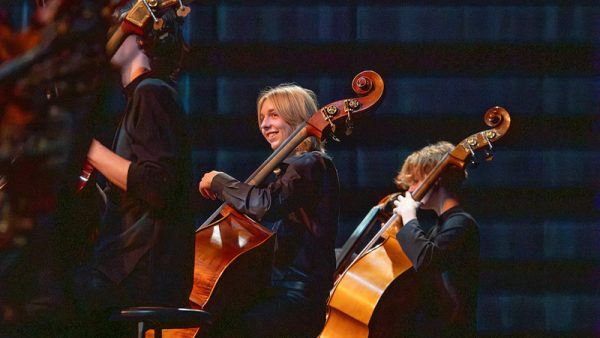
This has held true; both Hanson-Kickertz and Black plan on continuing their musical education beyond high school.
“I’m applying to college for double bass performance, so hopefully I will be able to work towards eventually playing in a professional orchestra or even teaching performance one day in a college through a doctorate,” Hanson-Kickertz said.
These three students are currently preparing to head to All-State Orchestra this February and take all that they have learned with them.