



On April 8, Austin ISD announced a $181 million budget deficit for the 2026-2027 school year, the highest the district has ever faced. AISD also increased the original predicted deficit for the current school year from $19 million to $45. Both deficits were a result of the simultaneous decrease in enrollment and property values. Enrollment has been steadily declining in AISD over the past 15 years, which lowers the amount of money AISD receives from the state annually because in Texas funding is based on attendance. In the 2011-2012 school year, 86,528 students were enrolled in AISD while in the 2025-2026, 69,207 students were enrolled, representing a 20% decrease in enrollment over the last 14 years. This number is only expected to decrease further as more students leave the district next year due to changes in immigration policy under the current administration, the introduction of the voucher system and the possible changes to the district next year due to the deficit.
At the same time, property values have also gone down, decreasing the amount of tax dollars that AISD receives from homeowners. During the post-pandemic housing boom, the market saw a 68% increase in median housing values over two years and in May of 2022, the median property value peaked at $667,000, according to KXAN. Since then, property values have dropped almost 18% to a median value of $550,000. At a board meeting on April 23, AISD Superintendent Matias Segura explained that the decrease in property values and attendance translates into the loss of millions of dollars of funding.
“[Previously], there was an unprecedented property value increase and average daily attendance was growing which let us cover our expenses” Segura said. “Now, there’s a swing [in property value decrease] of tens of millions of dollars.”
AISD’s budget deficit has also grown due to the Robin Hood Plan, now known as Recapture. Signed into law in 1993 by former Texas governor Ann Richards, Recapture redistributes money from wealthier districts with higher property tax values to districts in rural areas with lower property tax values. Although the program was designed to ensure urban and rural areas received equal funding, many students and teachers have criticized the amount of money that Recapture takes from districts like AISD. In the 2025-26 school year, AISD’s recapture payment came out to $659 million in addition to over a billion dollars in operating expenses. While junior choir major Naomi Gostylo agrees with the principles of Recapture, she feels that the extent to which it has been used has played a large role in AISD’s budget deficit.
“I feel like it’s good in theory because obviously we want to send money to different schools who don’t have a lot of money,” Gostylo said. “The whole point of Robin Hood Recapture was to give everyone a fair chance in education but now schools like ours in the city don’t have the same resources even though we have more students. I feel like the money should be better split and better balanced overall.”
On April 8, AISD announced that they planned to save millions of dollars through job cuts, as 87% of the district’s expenditures come from staffing. The district hopes to save $23 million by eliminating vacant positions, $41 million by cutting positions in departments, and $24.5 million through staffing reduction, according to KUT News. Although principal Andy Baxa understands the need to make budget cuts, he also fears the impact that these cuts could have on McCallum’s community.
“It is never easy to think about cutting staff and possibly impacting student learning,” Baxa said.
“I understand the need to make changes due to an ever changing financial landscape, but I am saddened by the stress and anxiety this process causes for our staff, students and community.”
While it is still unclear what positions will be cut, AISD’s staffing policy typically gives preference to those who have held a job at a school for the longest. This has caused athletic trainer Andra McDougall to worry for her job, who joined McCallum’s training team this year after discovering her love for sports medicine her senior year of high school. However, McDougall has cast the threat of job cuts in a positive light.
“I think this is an opportunity for me to really advocate for myself in the profession,” McDougall said. “Athletic trainers have always been kind of given the notion that they are there for Band-Aids and ice, but we are far beyond that. We work in all kinds of settings and provide immediate 911 care before paramedics get there.”
Although the district might cut positions like McDougall’s that they’ve deemed non-essential, McDougall believes that doing so could be very harmful not only to the training team but to McCallum’s athletes. As McCallum has over 800 student athletes, one trainer likely wouldn’t be able to ensure they all received proper medical care, especially at games.
“It would be a lot of hours and a lot of burnout,” McDougall said. “Games would be uncovered so if there’s an emergency in that situation, the athletes don’t have any care on the field and that can be a really big problem.”
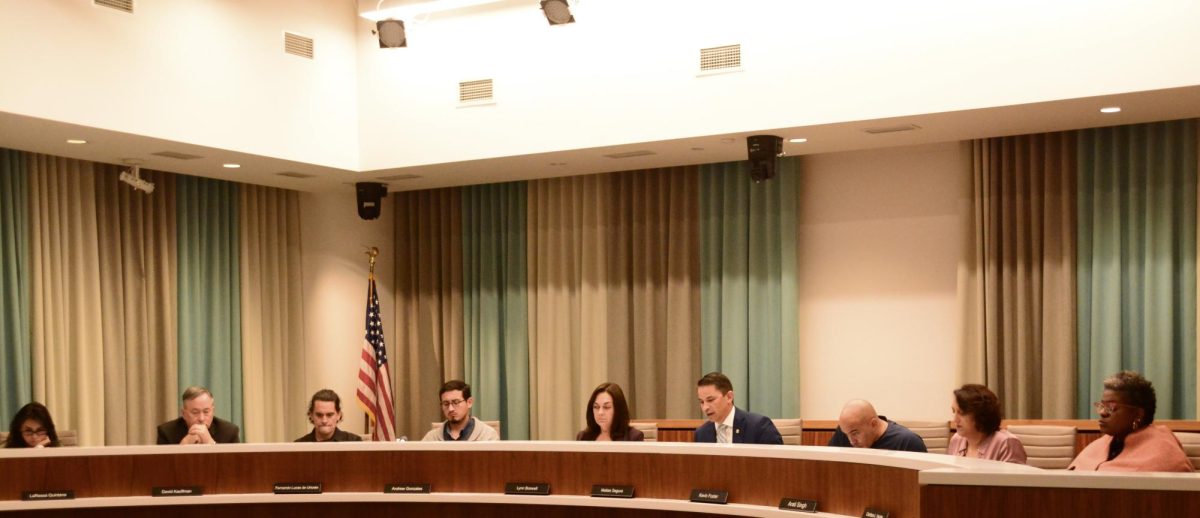
Aside from staffing cuts, the school board discussed other ways to close the budget deficit at their most recent meeting on April 23. At the elementary level, Chief of Staff La Kesha Drinks proposed increasing recess time and switching schools back to a MAP schedule that rotated music, art, and PE instruction so students only had one of these classes each day, which would decrease the amount of planning time core teachers received. At high school, the discussion focused on changes to student schedules and teachers’ planning periods. Drinks proposed maintaining the current 6 out of 8 schedule (meaning teachers teach six classes and get two planning periods), cutting a planning period to adopt a 7 out of 8 schedule, or decreasing class time to have an 8 out of 10 schedule. Drinks feels that having different proposals gives communities a greater say in the scheduling while potentially decreasing the deficit.
“As we have allowed people to bring ideas to the table and to be a little more creative, we have some sample schedules that are like 8 of ten,” Drinks said. “That just speaks to the fact that there’s a lot more to the conversation and the way that you reach those ideas is just to engage all of the different groups of people.”
Nevertheless, Gostylo worries that it is too late to implement such drastic changes to students’ and teachers’ schedules before the 2026-27 school year.
“It’s a huge shift, and if they wanted to go back to a different type of schedule, they would have to warn us a few years in advance,” Gostylo said. “We already filled out choice sheets, so it would just be a huge mess.”
Gostylo also worries that potentially decreasing class time through a 8 out of 10 schedule or even a 6 out of 7 schedule could negatively impact students’ learning experiences, especially in fine arts classes such as choir.
“I don’t think I would be able to turn in all my work on time if I’m trying to balance seven classes in one day,” Gostylo said. “I feel like 45 minutes is not enough time to really delve deep into certain topics in school. It’s also not enough time to practice, because I’m in voice lessons right now during class, and we need that whole hour and a half to make sure all the students get a chance to do voice lessons.”
At the board meeting, trustees also discussed cutting athletic and fine arts stipends, though no official plans for any cuts have been made yet. Junior visual arts major Ava Seiter fears that potential cuts to fine arts funding would hurt incoming student’s experience in the Fine Arts Academy.
“It makes me sad because I remember coming to the Fine Arts Academy and it just felt like a whole new world because of all of the different things it has to offer,” Seiter said. “I didn’t have this experience or these types of resources anywhere I’d ever been before so I feel really bad for the incoming underclassmen who might not have this kind of experience.”
Although Baxa sees that changes must be made within AISD to overcome the budget deficit, he encourages McCallum students, parents and teachers to advocate for themselves by speaking up. On Tuesday, trustees Fernando de Urioste and Lynn Boswell will meet with teachers after school to discuss the budget. Community members can also fill out an AISD survey regarding budget cuts until April 30.
“The best thing our community can do to help support our school and district is to get involved with the process,” Baxa said. “Let your voice be heard by those who can affect change.”
On May 7, the board will meet again to discuss further budget reductions and on May 21, the board will discuss the recommended budget before voting on the budget on June 18.