

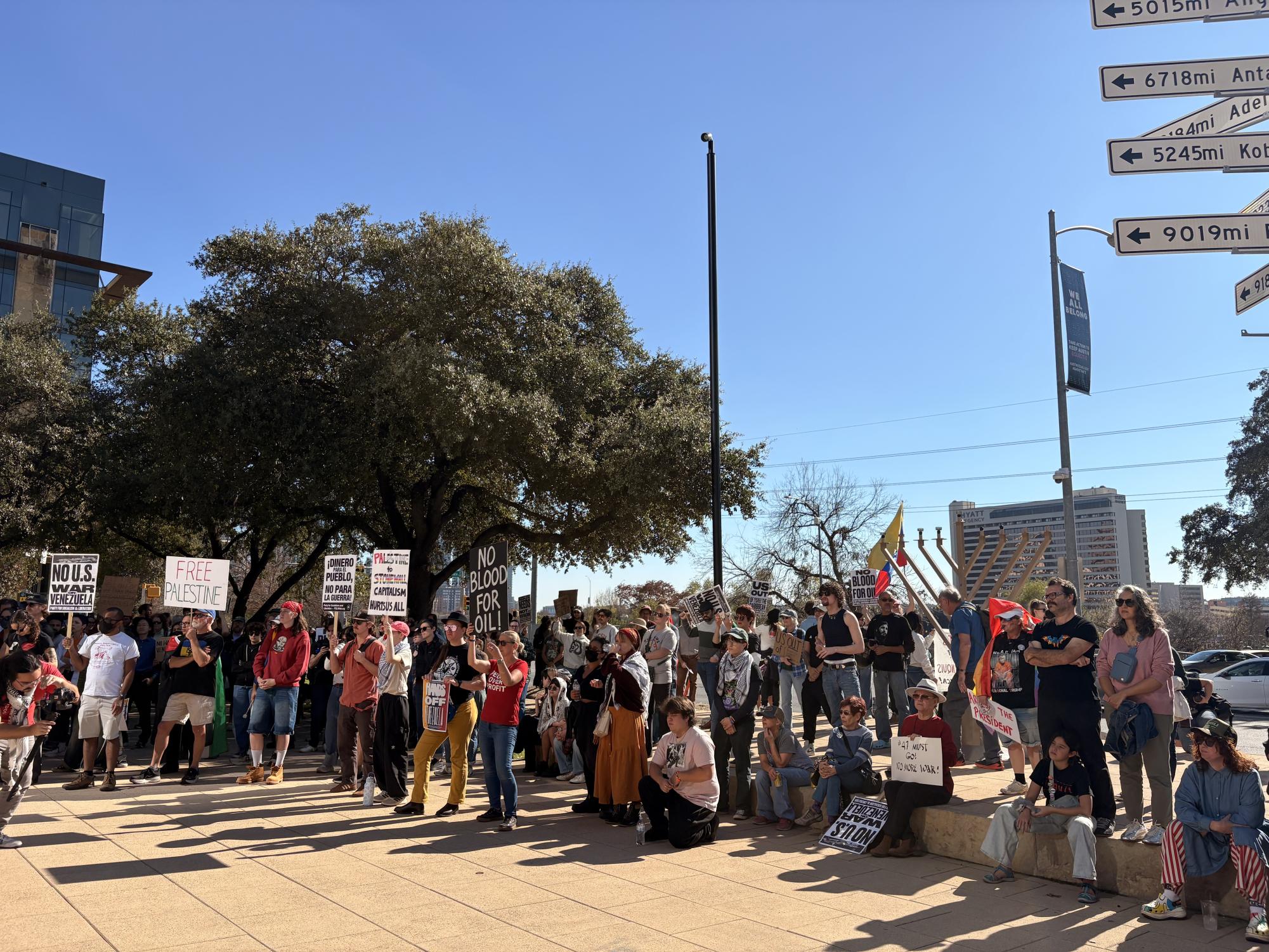
On Jan. 4, demonstrators gathered in front of Austin City Hall to protest the attack on Venezuela and the capture of Venezuelan dictator Nicolas Maduro by American armed forces two nights before. Nationally, over 75 demonstrations were put on over the weekend in opposition of the actions of the US military. The United States captured Maduro on grounds of American drug charges and narcoterrorism, but widespread public outcry has been pointed towards American military overreach, a supposed ploy for untapped natural resources in Venezuela and violation of international law by the Trump administration. Furthermore, public opposition to American military actions towards Venezuela is far from new.
Since August, and leading up to the capture of Maduro, America has taken military action off the coast of Venezuela in the Caribbean. In August, the Pentagon dispatched fighter jets, thousands of troops and warships into the areas surrounding Venezuela, leading to a further increase in tensions. In early September, President Trump ordered a strike on a fishing boat he claimed to be carrying terrorists. The boat strikes continued as the months led on, and as of Dec. 31, 115 people had been killed in 35 strikes. In late October, USS Gerald Ford, the United State’s largest aircraft carrier, was deployed to the Caribbean. On Dec. 10, an oil tanker was seized off of the coast of Venezuela as another push to undermine the country’s oil business and power.
These actions transpired into the kidnapping of Maduro on the night of Jan. 2 along with the concurrent strikes on highly populated areas of Caracas. Despite civilian deaths, the Venezuelan response to the capture of Maduro has been extremely positive. Internationally, supporters of his capture have flooded city streets crying tears of happiness while being juxtaposed by protesters of the American military strikes in the region. The widespread public response to the attacks is one of anger with many believing that the United States struck Venezuela for untapped natural resources, specifically an untouched oil reserve in the country. At the protest at Austin City Hall, the outcry was one of anger. Protesters held signs reading “no blood for oil” and “US out of the Caribbean.”
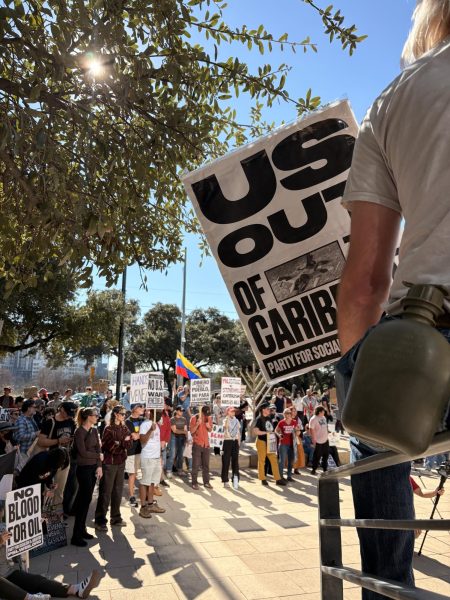
The central area of protest consisted of speakers from local Austin socialist organizations who presented their stance on the issue of American war in Venezuela. The Freedom Road Socialist Organization, a national socialist organization of revolutionaries who believe in fighting for socialism in the U.S. The organization is relatively small in Austin, but they’re active in many different mass movements from the movement for immigrant rights to movements in trade unions, for workers’ rights, to the antiwar movement and more. Jake Holtzman, a representative from Freedom Road Socialist Organization, presented his opinion to the demonstrators and emphasized the importance of awareness surrounding the topic.
“I came out here to speak today because of these atrocities that have occurred with the U.S. attacking Venezuela, not only bombing Caracas, but also illegally kidnapping their sitting president, which is really outrageous and criminal,” Holtzman said. “I wanted to come out here today to speak out against that and against the U.S. war on Venezuela.”
Holtzman spoke to the large crowd of supporters, and afterwards, he reflected that it was inspiring to see so many Austinites out in the streets in opposition to American action.
“It’s really inspiring to see that people have mobilized so quickly in light of this,” Holtzman said. “I hope that we can build a really powerful movement that can demand change. That’s what it’s going to take. It’s going to take millions of people coming out to protest against this and say that we’re not okay with our taxpayer money going to fund these kinds of wars.”
The taxpayer money that Holtzman described was a large part of the protest. Many demonstrators expressed their opposition to their taxes going to fund international American military action. Although the action taken in Venezuela is considered international, a representative from the Party for Socialism and Liberation (PSL) expressed their concerns of how local Austin, tax-funded arms manufacturers could have played key roles in the attacks in Venezuela. In the past, local start-up think tank Capital Factory has been at the forefront of public criticism for their funding of military start-ups that design weapons used overseas by the American military.
Capital Factory was denounced again by another representative of PSL, Scarleth Lopez, who emphasized their belief of the negative impact of Capital Factory and other local manufacturers internationally.
“As we know, there are manufacturers here in Austin that have been working with manufacturers, Israeli manufacturers for weapons of surveillance weapons to kill, that have been tested on Palestinians and brought to the United States,” Lopez said. “We have no doubt that these are the same weapons that are being used on Palestinians are now being used on Venezuela.”
Lopez also emphasized the PSL opposition towards the kidnapping of Maduro and support of those living in Venezuela who are still being negatively impacted.
“We are completely 100% against these illegal attacks against a free country,” Lopez said. “We oppose Donald Trump’s kidnapping of a president. We oppose this war on Venezuela, and we’re here to stand with our brothers and sisters of the working class of Venezuela.”
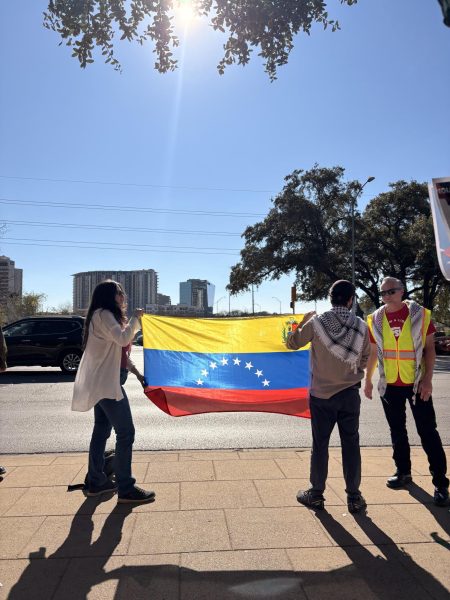
The support of Venezuela continued throughout the demonstration and spread closer to Cesar Chavez Street where protesters stood near the street holding Venezuelan flags. Cars driving by honked in support of the demonstrators. McCallum junior EB Parry attended the protest, and supported the street side. For Parry, the idea of protesting is more than just a show of opposition towards American military action, but it represents the importance of advocacy power in numbers.
“Local peaceful protesting is always a big part of movement because it lets everybody down to the last person know where we are and our beliefs,” Parry said. “If it’s every city, then people in Washington are going to notice. If everybody shows out, then change will happen.”
To Parry, the large number of demonstrators in front of City Hall on Jan. 4 shows the action needed to cause change in American politics and the surrounding actions such as those in Venezuela.
“I think communal action in the form of protest is necessary to keep the freedom and change happening in our society,” Parry said.